6/ Interim, stage 1, Feb 2024-Jun 2024
scratches
- one sentence on the topic of your station: what is your most connected opinion towards nature
- helene: Nature is therapeutic, we can connect more with each others through nature
- yuki: Nature is our teacher, by learning nature growing we can learn how we should live.
- yvonne: Natural ecology and human activities are always contradictory, even if destructive, but in the end can adapt and survive
- achuta: Nature serves my needs not my greed,even during grief – stricken times in our souls, I can confide!
- Aims and end goals of our performance:
- Show through movement the invisible thing of nature
- a
- aim: Invisible dynamic between human and nature become visible in the performance
- end goal: dynamic of human and nature never ends, we invite you to think: where do you stand?
- b
- aim: Ambiguous piece for audience / Is the human a creator or a creation?
- end goal: Invisibility of nature in our performance
- title: creator or creation? creator/ion?
- Nature is our teacher, we can learn to growth as a society, co-existing with other nature creations and not overstepping on them.
- Humans have an original awareness, we as human can trigger to be nature and vice versa.
- There is the collective unconsciousness, focusing more on the shift between the human and the nature. Not just nature separate to human.
- Invisible thing of nature that we are making visible in the performance
- Human society and nature society, the two of them have a connection. Ex: piano is a beautiful thing for humans, and for nature they see is as a thing where they can grow. The interconnectivity is growing and moving.
The Kitchen Station,
initially part of Elementals, was meant to symbolise overconsumption, both of food and plastics. In modern kitchens, nearly all food we buy comes wrapped in plastic, making this space a key reflection of our consumption habits. The station aimed to show how plastic infiltrates our lives, especially through microplastics that enter our bodies via food.
By juxtaposing plastic with food, it highlighted how the natural and artificial are now intertwined. Though removed from the final performance, the Kitchen Station emphasised the environmental impact of everyday choices, reminding us that consumption—even in our homes—has lasting consequences.
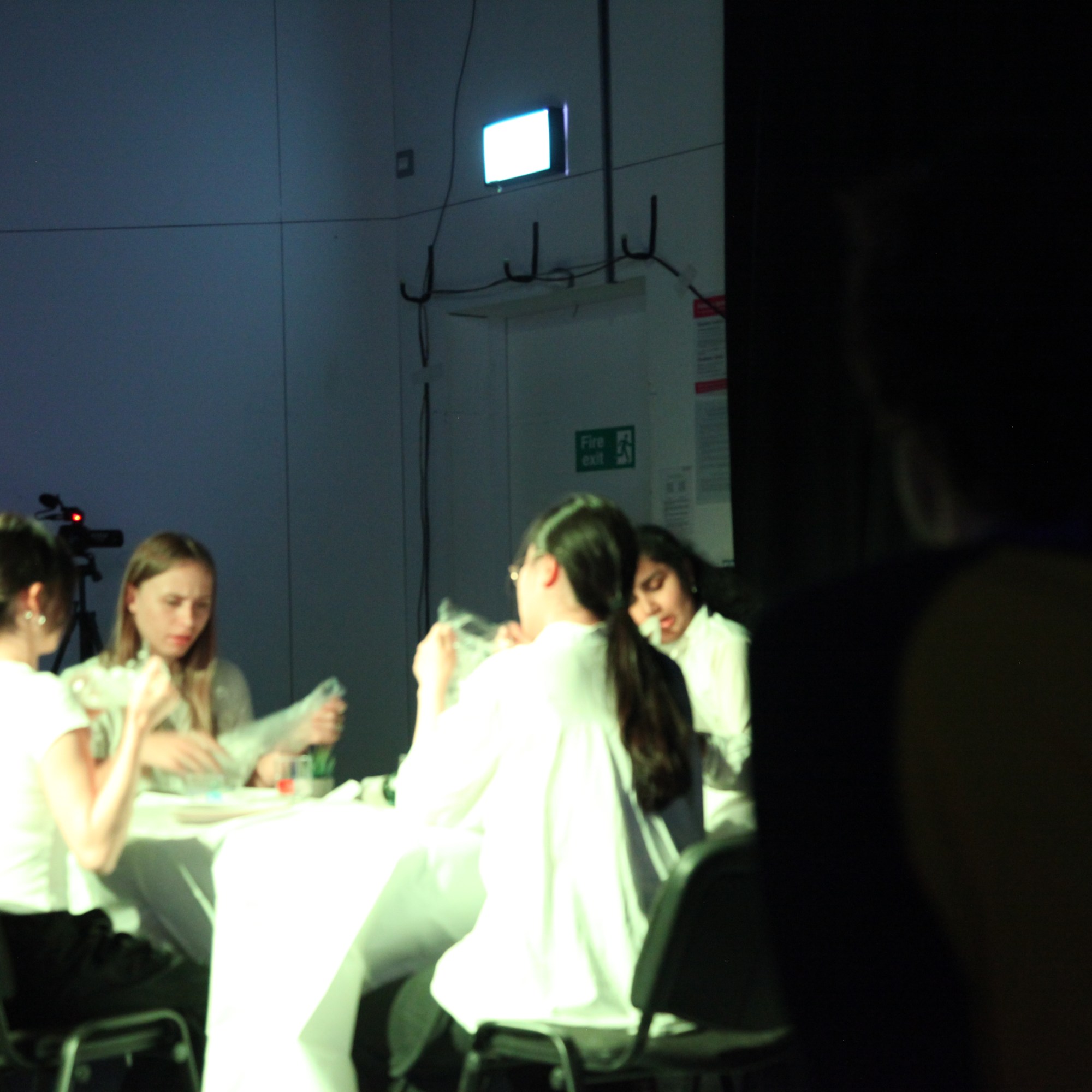
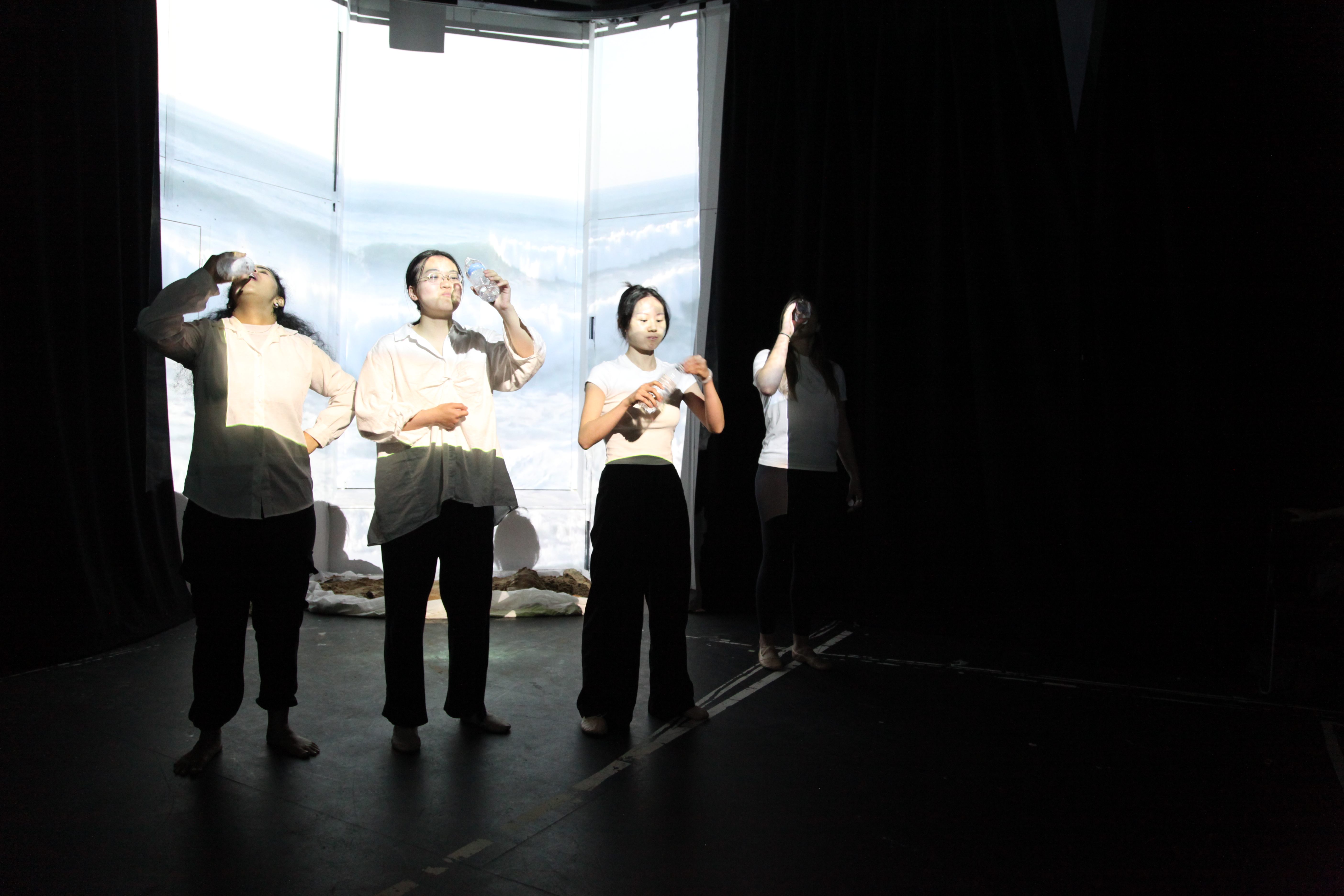
The Ocean Station,
we delve into the profound questions of creation and creator, examining the intricate relationship between humanity and the natural world. It challenges the perception of nature as something separate from us, highlighting its integral role in the Earth’s ecosystem. As we navigate the grief inflicted upon the environment by human activities, we confront the cascading catastrophes that evoke a sense of “sostalgia”—the nostalgic longing for a world that once was. Through movement and embodiment, it invites audiences to reflect on their connection to nature and the urgent need for harmony in a rapidly changing world.It explores the delicate balance of existence, where the lines blur between creator and creation, urging a collective awakening to our shared responsibility in nurturing the Earth While nature has the incredible ability to restore itself, we must ask: can we? This question lingers in the air, challenging us to reconsider our actions and our role in the healing of our planet.

The Piano Station,
the piano becomes a living environment, nurturing the growth of a plant. Yuki embodies the plant, her movements mimicking its slow exploration and expansion. She stretches and bends, seeking space within the piano’s cracks, as if trying to root herself in the remnants of human creation. The station symbolizes the beginning of a non-anthropocentric perspective, where Yuki, like the plant, navigates the boundaries between nature and man-made objects, blurring the lines between human and natural worlds in her quest for survival. This delicate dance opens a dialogue on coexistence and redefines what it means to grow in harmony with one’s environment.


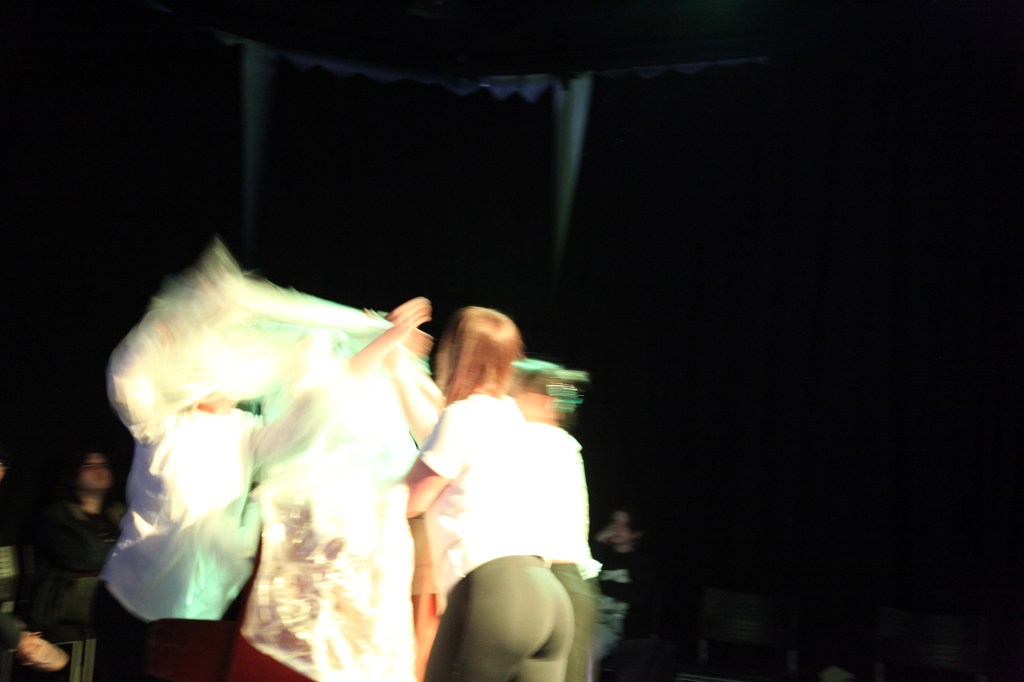
The Bathroom Station,
the space becomes a fusion of human and plant life, exploring the intricate relationship between human bathing rituals and plant growth. This interplay is manifested through the repetition and variation of rhythms, embracing elements of absurdity. As humans engage in their daily cleansing activities, the plants respond, their growth influenced by the water and energy of these rituals. The station highlights the inherent contradictions between natural ecology and human behavior—often destructive yet paradoxically adaptive. Ultimately, it reveals a resilient cycle of coexistence, where both humans and plants navigate their intertwined existence, showcasing the beauty and complexity of survival in a shared environment.
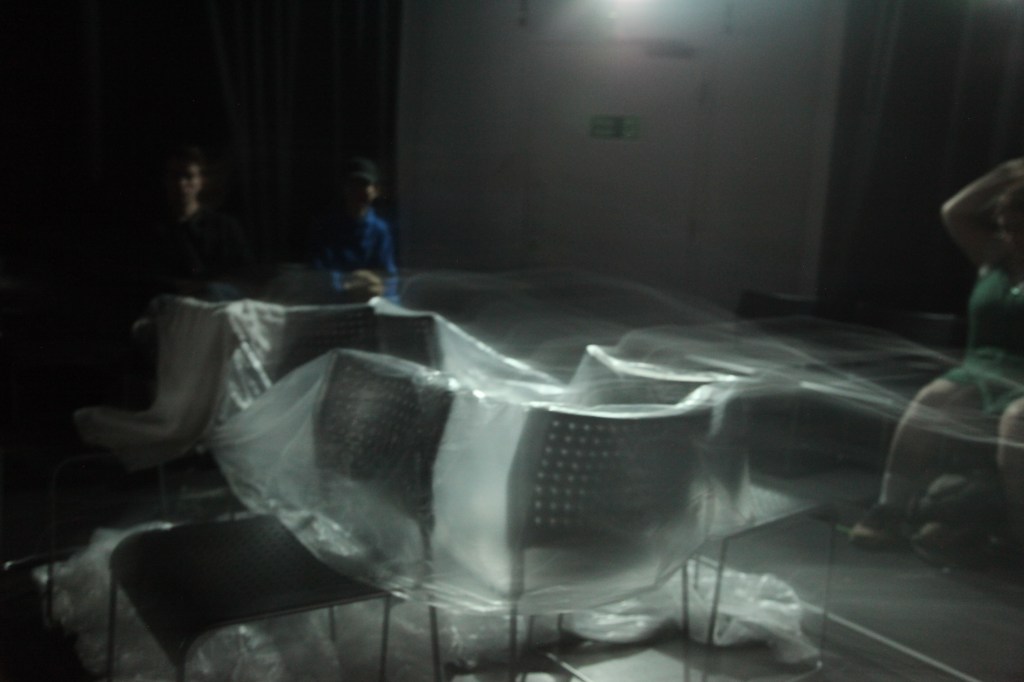
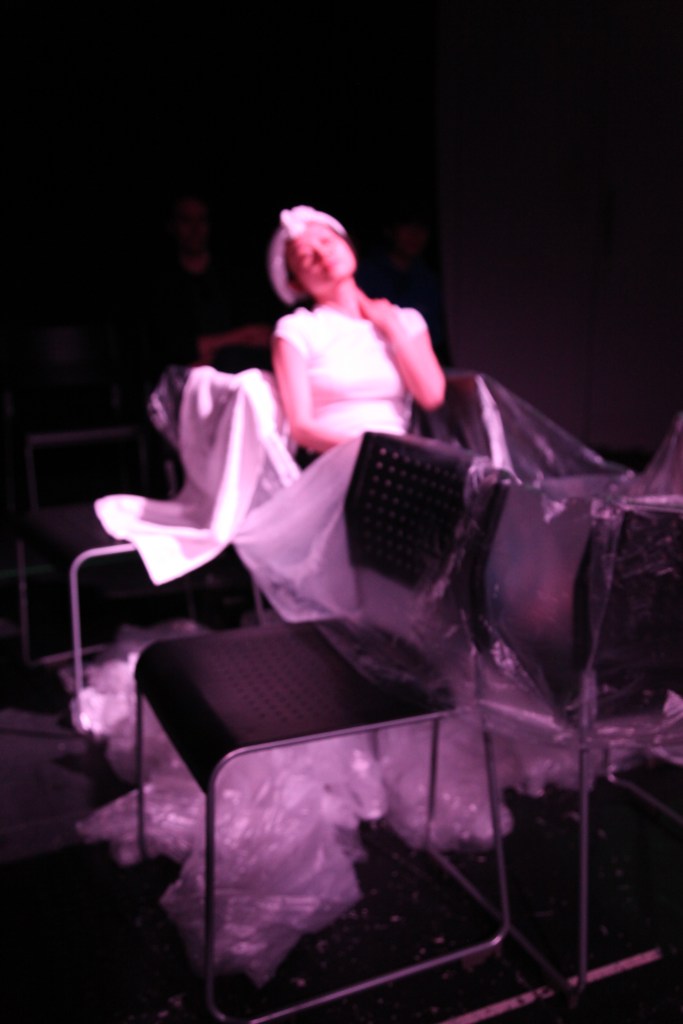

In the interim presentation, we fully embraced the theme of plastic pollution, but the execution across the four stations felt chaotic at times. While there were moments of fusion, some elements confused the audience, and the visual aspects appeared messy to us. We’re at a pivotal stage, eager to explore new directions and refine our approach.
Importantly, we’ve recognized a contrast in working styles: Yuki and Yvonne’s preference for action followed by reflection stands in stark opposition to Achuta and Helene’s method of thinking, discussing, and then doing. This discrepancy has led to struggles in advancing to the next stage of development, particularly regarding whether to maintain the four stations. We also seek significant changes in our dramaturgy. After much deliberation, we agreed to take a month-long break, which presented a crucial turning point in our process.
To gain fresh perspectives, we consulted ATP tutor Nohar as a third eye for advice, created a shared “Document of Inspirations and Tasks”, and a practical to-do list before the final show.
As a result, during the month-long break, we convened online four times to share our individual thoughts on the dramaturgy, and the discussions have begun to flow more smoothly.
 yuki
yuki 