8/ Q&As from the Team
Why Did We Use Props in the Ocean Station?
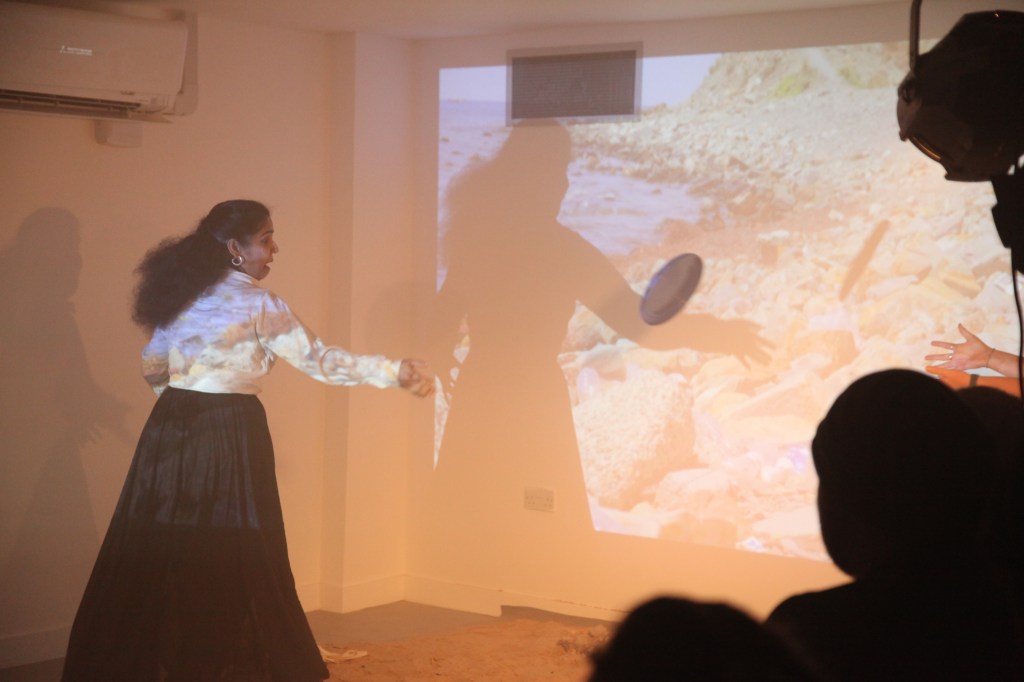
We aimed to create a strong connection between the artificial and the natural in the Ocean Station. Since it’s impossible to fully recreate the vast ocean on stage, we used projections to evoke its presence while blending the artificial with the natural.
In addition to projections, we included props like sand, frisbees for playing, tools for building sandcastles, and picnic setups to evoke an ocean-like atmosphere. These props helped enhance character connections and create a realistic environment that immersed the audience in the ocean’s vibe.
The physical and technological elements in this station also invited the audience to reflect on the blurred lines between reality and artifice. While the frisbees and sandcastle tools suggest playfulness, they exist in a context dominated by plastic waste. This duality enriched the narrative, transforming the props into symbols of overconsumption and environmental degradation. They highlighted the tension between our enjoyment of nature and the harm caused by our actions, prompting the audience to consider their role in this relationship.
By using these props, we aimed to create an immersive experience that conveyed both the beauty of the ocean and the seriousness of its degradation. This approach merged the natural and artificial, evoking nostalgia and urgency while prompting the audience to question their own connection to nature.
Why Did We Include Audience Participation?
We incorporated audience participation to create the most immersive experience possible. Our intention was to transform the audience from passive observers into active participants in the narrative of pollution. By involving them directly, we emphasized the real-life connection between individual actions and environmental degradation. This engagement highlighted the collective impact of everyday choices, reinforcing the central message of our performance: that pollution is a result of shared human behavior.
Additionally, we invited some audience members to join us in a “picnic” scene, which was a pivotal moment illustrating pollution and consumption. This interaction allowed us to explore how real people might react in a setting where the performance vividly demonstrates environmental harm. By blending the audience into the scene, we provided a tangible experience of the pollution theme, making the consequences of their actions more immediate and impactful.

Why this sitting arrangement for the audience?
For our performance of Elementals, we explored various seating arrangements to enhance the thematic depth of the show. Initially, we considered several setups, including an 8-shaped configuration, which we ultimately found too restrictive for the performance space. We appreciated the idea of compelling the audience to adjust their views, which could create a more dynamic and interactive experience. We also explored a promenade arrangement, where the audience would walk on stage, aligning with our theme of everyday human actions and their often overlooked consequences. Although these ideas were intriguing and aligned with our thematic goals, we chose to adopt a scattered, wave-like seating arrangement. This final setup reflects the juxtaposition of nature and chaos central to our performance, challenging traditional theatre seating while evoking a sense of both natural flow and artificial disruption.

What is the Music Making Process?
As a creator with a background in music composition, Yuki incorporated some of her earlier pieces into the interim production. Afterward, she expanded her sound library by recording new natural sounds from her hometown in China, including the rustling of grass, footsteps, and wind. These were imported into Ableton, where she applied effects such as echo, reverb, and samplers to craft an original soundtrack. A key feature of her composition is the use of a central motif, which she varies throughout the show, creating a cohesive suite. Additionally, Yuki contributed to Ocean Station by producing voiceover audio, adding text-based embellishments to enhance the performance, to deliberately create an overwhelming effect of the plastic pollution.
 yuki
yuki 